Enzyme-embedded plastics break down near-completely in the deep sea
In short
- Near-complete deep-sea degradation was shown for enzyme-embedded compostable polyesters, per a Nature paper published 21 October 2026.
- Thermal enzyme embedding greatly accelerates breakdown across marine environments.
- The material's performance is preserved, according to the study; the strategy is presented as promising, not yet deployed.
Why the Good News Desk likes this one
The study tests a way to make compostable polyesters degrade quickly in the deep sea, where ordinary plastics persist for long periods. The authors report that embedding enzymes by heat greatly speeds breakdown while keeping the material working. The results are laboratory findings in a research journal, so real-world use and environmental effects still need testing.
From Nature
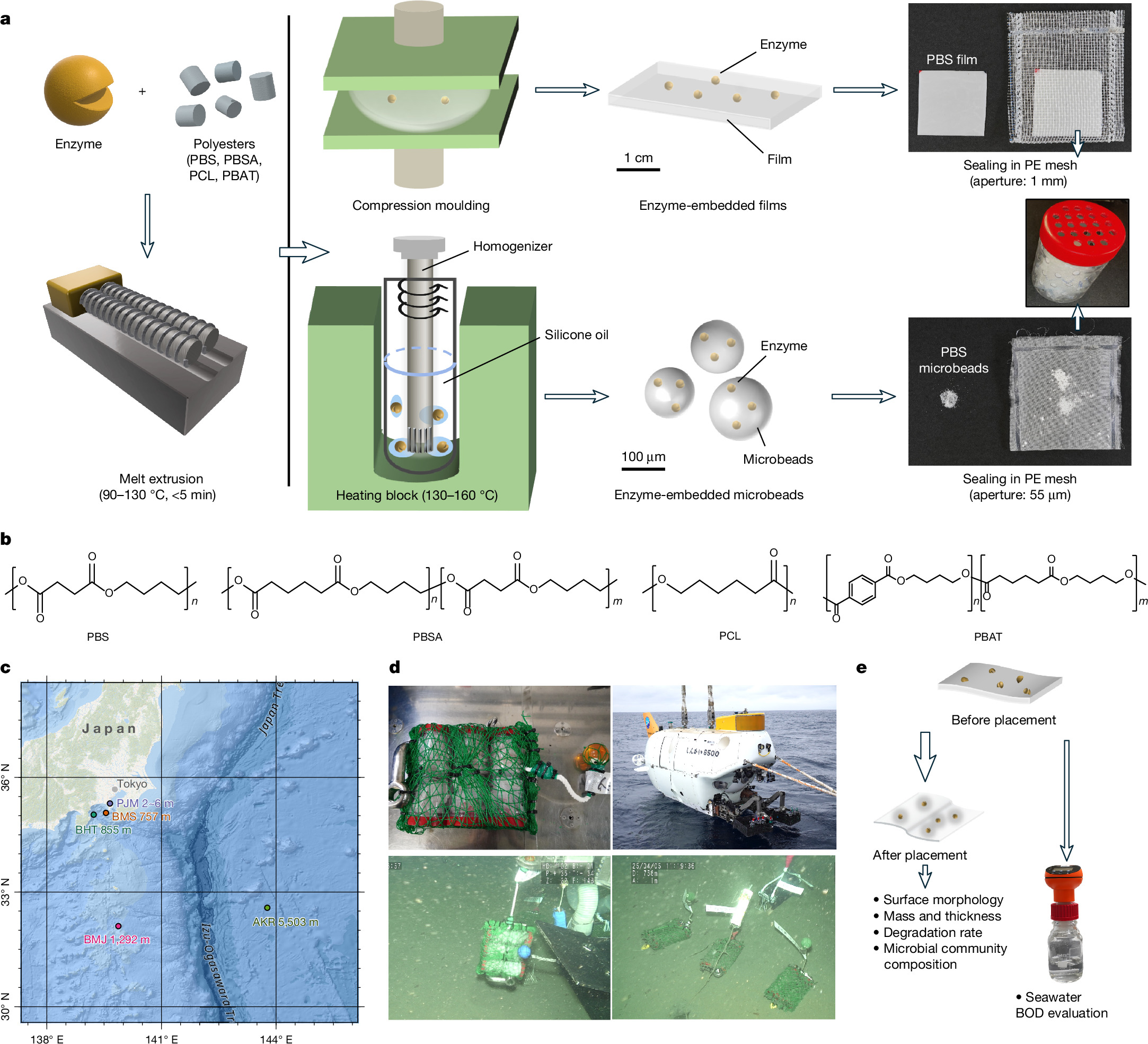
Nature, Published online: 21 October 2026; doi:10.1038/s41586-026-11192-1 Near-complete deep-sea degradation of enzyme-embedded compostable polyesters shows that thermal enzyme embedding greatly accelerates breakdown across marine environments while preserving material performance, offering a promising strategy to mitigate persistent ocean plastic pollution.
Ask this story
For kids
Some plastic stays in the ocean for a very long time. Scientists made a special plastic with tiny helpers called enzymes inside it. In their tests, it broke down almost completely in the deep sea. Can you think of a way to keep litter out of the ocean?

