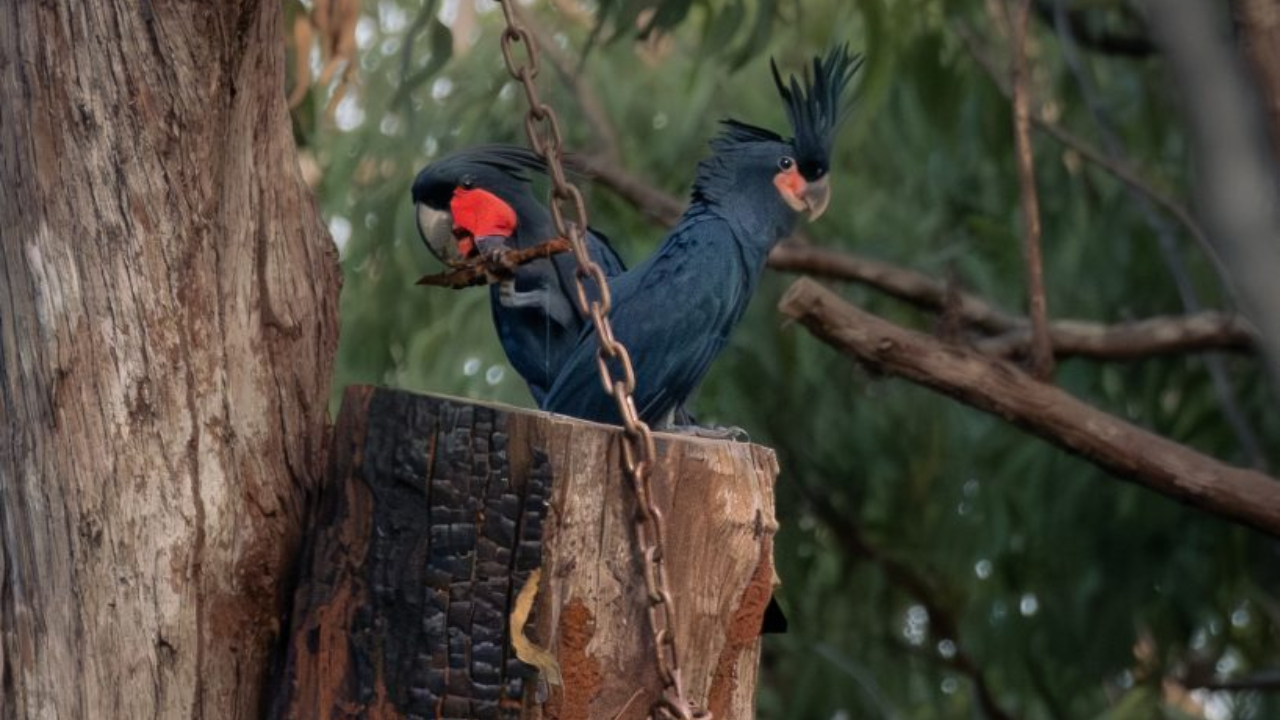
Endangered palm cockatoos raise first chick in artificial nests
In short
- Conservationists installed 29 artificial nesting hollows in the Cape York Peninsula.
- A pair occupied one within a month, and the project recorded its first fledged chick.
- Ongoing monitoring will assess how well the hollows support nesting and chick growth.
Why the Good News Desk likes this one
Palm cockatoos depend on large tree hollows, and those are in short supply in this part of Cape York. The first fledged chick shows the artificial hollows can work for the species. Whether the approach succeeds over more seasons is still being monitored.
From Times of India
A palm cockatoo chick has recently fledged from an artificial hollow in the Cape York Peninsula, marking a positive step for conservationists. They installed 29 artificial nesting hollows to combat the lack of natural breeding sites. This first successful breeding event is a pivotal achievement in palm cockatoo conservation. Ongoing monitoring will assess how well these new hollows can facilitate nesting and chick growth for this endangered species.
Ask this story
For kids
Palm cockatoos are big, dark birds that live in trees in Australia. They are endangered, which means there are not many of them left. People put 29 wooden homes in trees, and one baby bird has just flown out of one of them.