Cold-induced molecule from muscle helps worms live longer
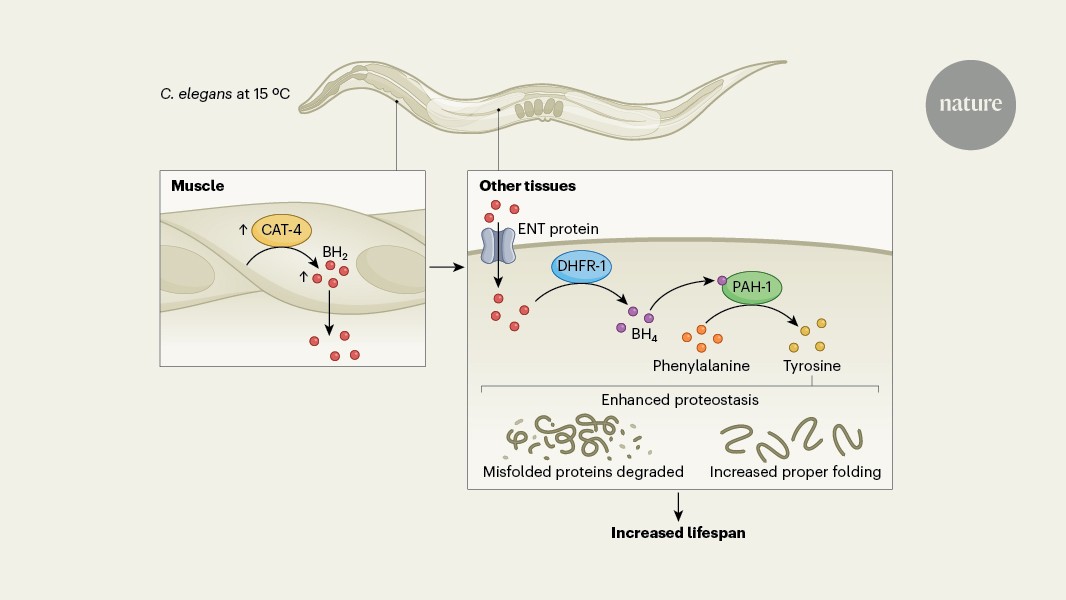
In short
- In nematodes, a metabolite induced by cold links low temperatures to a body-wide longevity signal.
- The signal originates from muscle-derived molecules, according to the study summary.
- The same signalling system has also been seen in human cells, the summary notes.
Why the Good News Desk likes this one
The finding connects a simple environmental cue, low temperature, to a signal that extends lifespan in an animal model. Because the same signalling system appears in human cells, it may point to a pathway worth studying further. The work is basic research, so it is far from any treatment for people.
From Nature
Nature, Published online: 21 October 2026; doi:10.1038/d41586-026-03066-3 In nematodes, a metabolite induced by the cold links low temperatures to a body-wide signal that promotes longevity. This signalling system is also seen in human cells.
Ask this story
For kids
Worms are tiny animals that live in soil. Scientists found that when worms get cold, their muscles make a special molecule. This molecule sends a message around the body that helps them live longer. Do you think animals have other ways to protect themselves from the cold?

